
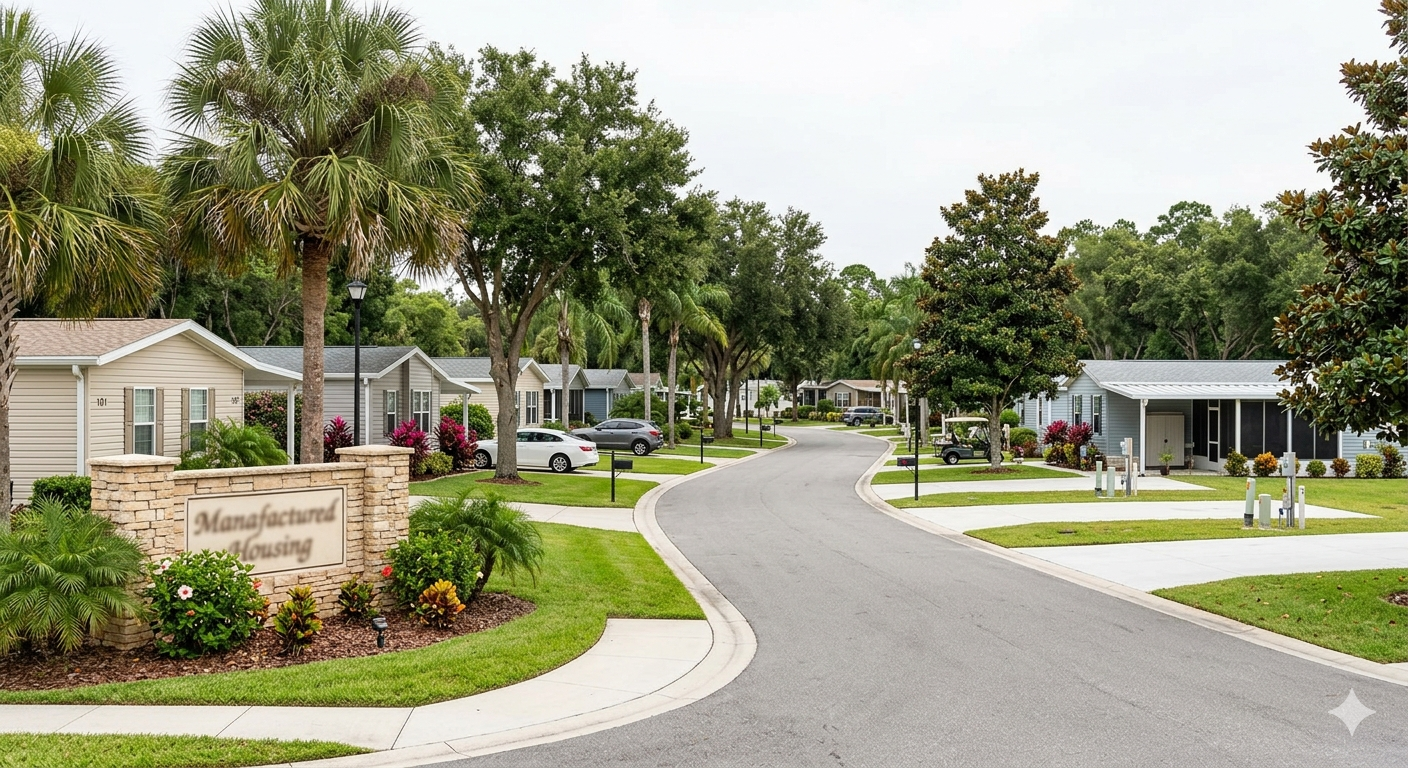
A manufactured housing community performing at partial occupancy carries a real cost — not just in lost rent, but in the perception it creates for prospective residents who drive through and count empty pads. At Stoneridge, a 130-site community in Central Florida, 20 lots sat vacant when Starkey Real Estate and Development engaged. That gap was the assignment.
On paper, 20 lots in a 150-site community looks like a finish-line problem. In practice, it rarely is. The last lots to fill in any stabilized community are often the ones that have resisted previous lease-up efforts — whether because of their location within the community, the asking rate relative to competing inventory, or a marketing approach that wasn’t reaching the right audience. Stoneridge was no exception.
Starkey began by understanding why those 20 sites were still vacant. That diagnostic work — looking at the competitive set, the community’s positioning, and the prospect funnel that had been used — shaped a revised approach. Pricing was evaluated. Marketing channels were adjusted. The physical condition of the vacant pads and any shared infrastructure in that section was reviewed to ensure there were no presentation issues working against the lease-up.
The result was a structured, systematic lease-up that moved all 20 sites to occupied status and brought Stoneridge to full stabilization. For the community’s ownership, full occupancy meant a fully performing asset. For Starkey, it was another example of the kind of focused, methodical work that separates a real fill-up program from a marketing brochure.